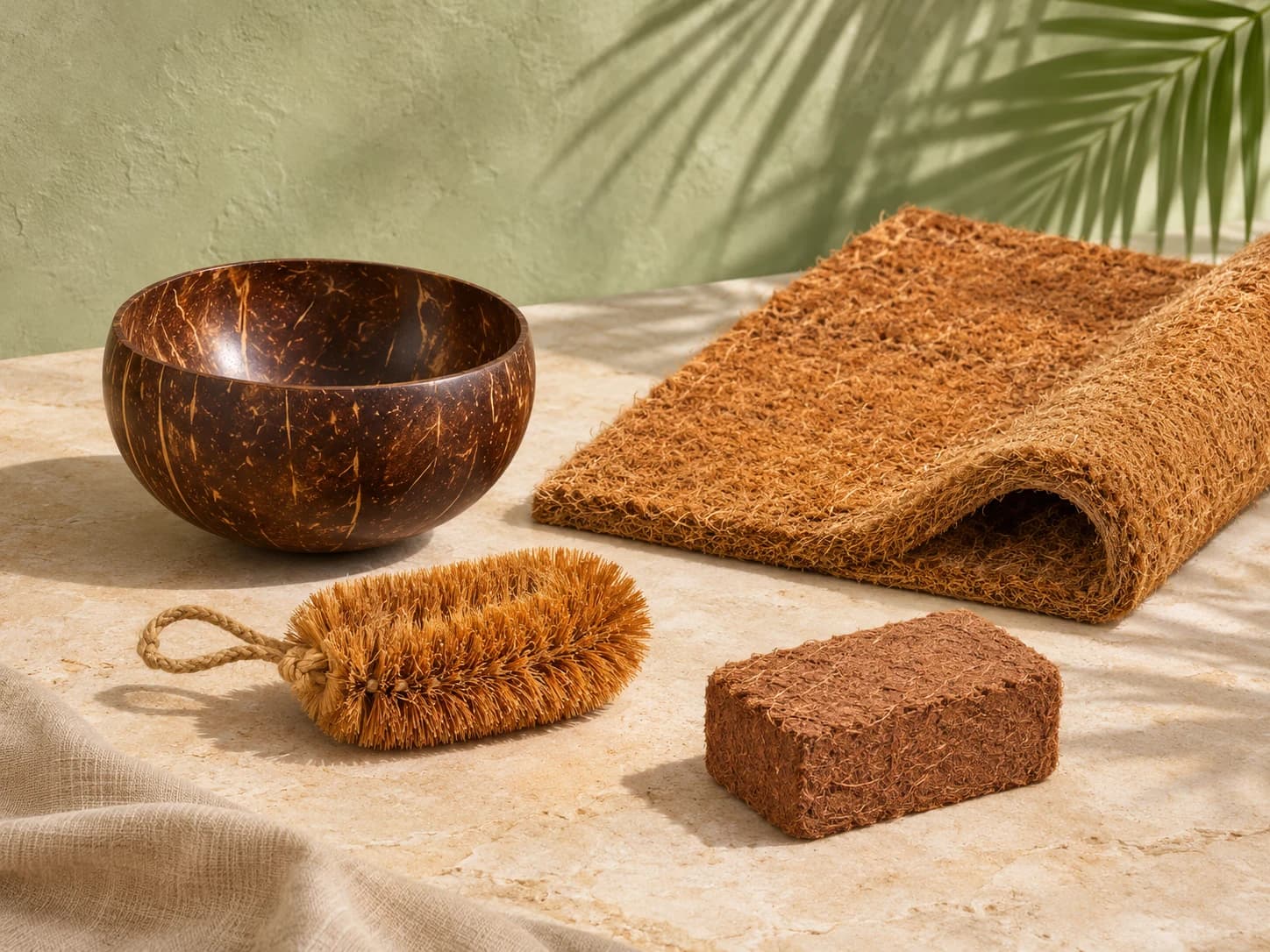
Coconut products do not all use the same part of the fruit. Knowing the difference between shell, coir and pith makes it easier to select a product and describe the finish you need.
Shell: a hard material for crafted objects
The hard coconut shell can be shaped into bowls, cups, spoons and planters. Its brown surface and individual grain give each piece a distinct appearance. Compare the rim, base, finish and usable shape when reviewing samples. See our coconut shell bowls and planters. DirectCreate describes these established uses in its coconut craft guide.
Coir: the coarse fibre from the husk
Coir is the fibrous material used in products such as mats and cleaning brushes. A woven runner and a piled doormat may share a material but have different constructions. Specify dimensions, thickness, weave or pile, edging and any backing separately. Explore coir doormats, runners and scrubbers. The Coir Board's mat information provides further material context.
Cocopeat: the finer pith
Cocopeat, also called coir pith, is the finer material associated with husk processing. It is supplied in forms including loose material, compressed blocks and discs. It is different from the long fibres used in mats. For growing-media enquiries, discuss the required screening, washing or buffering, moisture and testing rather than assuming all cocopeat grades are interchangeable. Compare cocopeat blocks, powder and coins, with background from the Coir Board.
Describe the finished product
Send the product type, intended use, preferred finish, quantity and delivery destination with your enquiry. Natural colour and grain vary. Approve the selected sample and specification before confirming an order.