
DPM - Dipropylene Glycol Methyl Ether
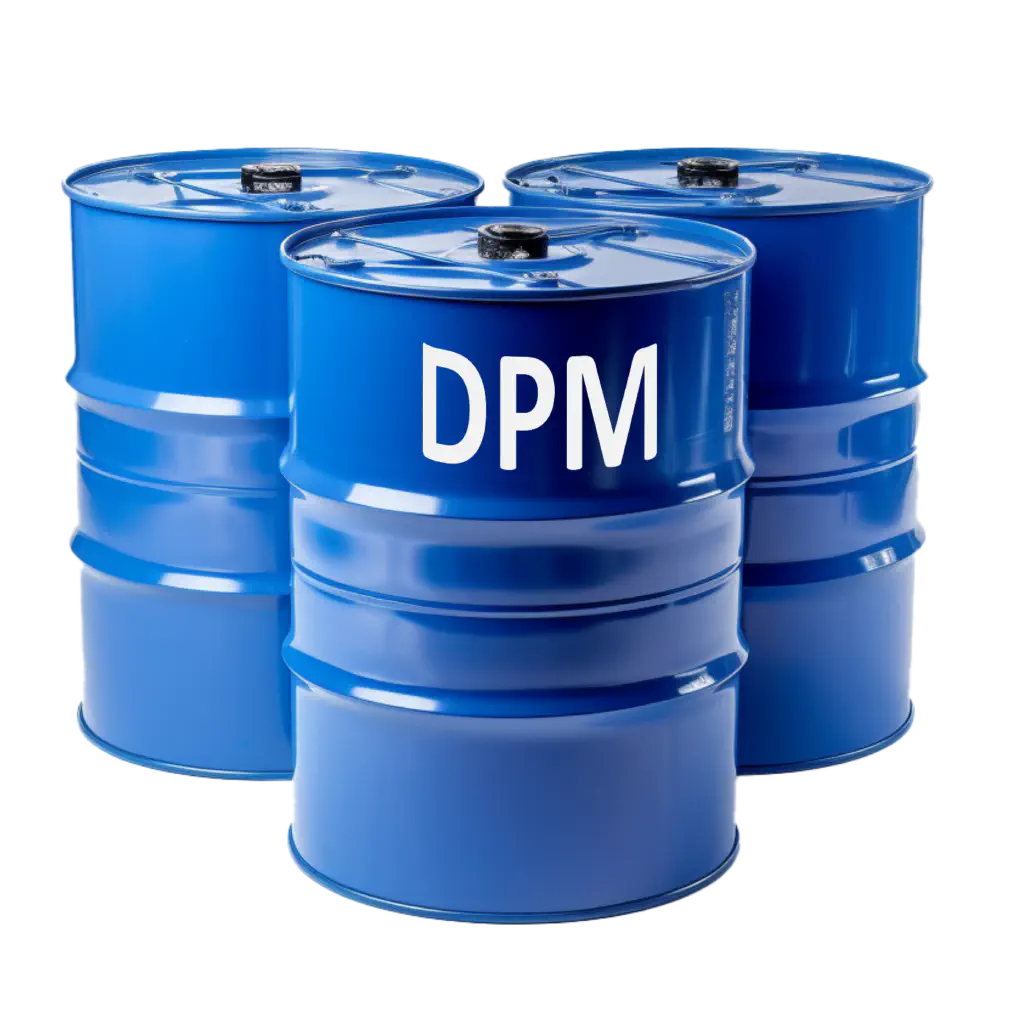
DPM (Dipropylene glycol methyl ether), also known as methyl diglycol, is a commonly used industrial solvent that offers several desirable physical features. Here are some of the physical features of DPM:
Applications
- Coatings and Paints. DPM is commonly used as a solvent in the formulation of coatings and paints. It helps dissolve and disperse various resins, pigments, and additives, improving the viscosity, flow properties, and overall performance of the coating or paint. DPM also aids in controlling drying time and enhances film formation.
- Printing Inks. DPM is utilized as a solvent in the production of various printing inks, including flexographic, gravure, and screen inks. It helps dissolve the ink components, ensuring good flow and spreading properties during the printing process.
- Industrial Cleaning Products. Due to its excellent solvency and low volatility, DPM is used in industrial cleaning formulations such as degreasers, paint strippers, and adhesive removers. It effectively removes oils, grease, dirt, and various contaminants from surfaces.
- Electronics and Semiconductors. DPM is employed as a cleaner and solvent in the electronics and semiconductor industries. It is used for cleaning printed circuit boards (PCBs), removing flux residues and contaminants. DPM is also suitable for thinning and cleaning semiconductor coatings and photoresists.
- Adhesives and Sealants. DPM is utilized as a solvent in the formulation of adhesives and sealants. It helps dissolve the adhesive components, providing good viscosity, flow properties, and adhesion. DPM is also used as a coupling agent, improving the compatibility between different adhesive components.
Characteristics
- Appearance. DPM is a clear, colorless liquid with a mild, ether-like odor.
- Viscosity. DPM has a relatively low viscosity, which means it flows easily. This makes it suitable for applications where good solvency and spreading properties are required.
- Boiling Point. The boiling point of DPM is approximately 190-198 degrees Celsius, which is relatively high for a solvent. This high boiling point makes DPM useful in high-temperature processes and applications.
- Density. The density of DPM is around 0.95 grams per cubic centimeter (g/cm³), which is slightly higher than water. It is considered to be a relatively dense solvent.
- Polar Nature. DPM is a polar solvent, meaning it has dipole-dipole interactions and can dissolve polar compounds. Its polar nature allows it to solvate a wide range of substances, including many resins, dyes, and oils.
Request a quotation for dpm - dipropylene glycol methyl ether
Tell us the grade, quantity and destination — we'll come back with pricing & availability.
Request a quotation →