
Slack wax
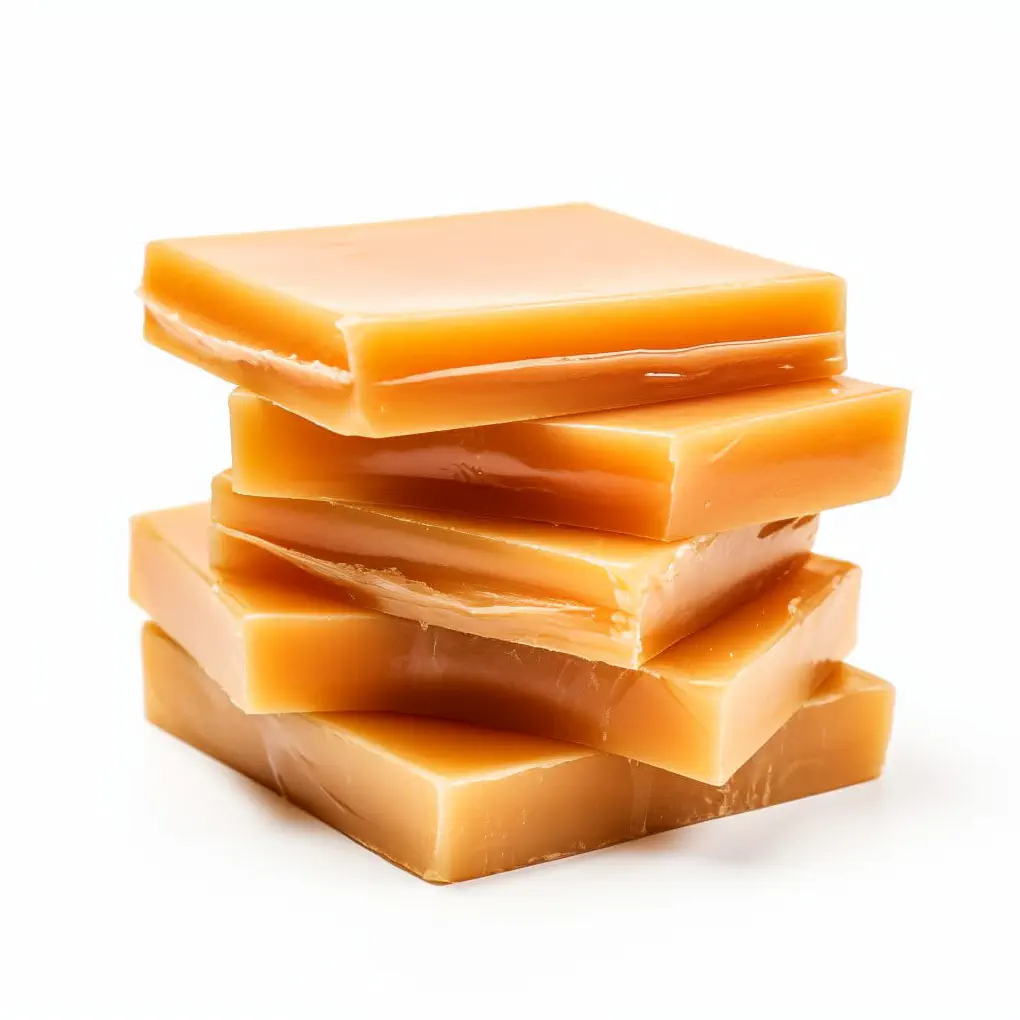
Slack wax is a petroleum-derived wax that is semi-solid at room temperature. It is produced as a byproduct during the process of producing lubricating oils. Here are some of the key physical properties of slack wax:
Applications
- Candle manufacturing. Slack wax is commonly used in the production of candles. Its high melting point and malleability make it suitable for creating pillars, votives, and other types of candles. Slack wax can also be blended with other waxes to modify their characteristics and improve overall candle performance.
- Coatings and sealants. Slack wax is utilized in the production of coatings and sealants. It can be used as an ingredient in formulations for paper coatings, waterproofing materials, and wood sealants. The waxy consistency and adhesive properties of slack wax help provide protective barriers and improve durability in such applications.
- Packaging materials. Slack wax can be used as a component in packaging materials, such as wax-coated papers and cardboard. The wax coating provides moisture resistance, helps prevent product spoilage, and enhances the strength and rigidity of the packaging material.
- Adhesives and glues. Slack wax is employed in the manufacturing of adhesives and glues. The waxy texture and adhesive properties of slack wax contribute to the bonding strength and durability of various adhesive formulations.
- Textile industry. Slack wax is used in the textile industry as a lubricating agent. It can be applied to textile fibers to improve their smoothness, reduce friction, and enhance processing efficiency during spinning, weaving, and knitting operations.
Characteristics
- Appearance. Slack wax typically has a semi-solid consistency. It can range in color from light yellow to brown or black, depending on the source and level of refinement. The texture can be smooth or granular, depending on the grade of slack wax.
- Melting point. Slack wax has a relatively high melting point compared to other waxes. The melting point can vary depending on the specific grade, but it typically ranges from 45 to 85 degrees Celsius (113 to 185 degrees Fahrenheit). The different grades of slack wax, such as light, medium, and heavy, have varying melting points.
- Density. The density of slack wax varies depending on its specific composition and grade. Generally, the density ranges from 0.8 to 1.0 grams per milliliter. It is typically less dense than water.
- Viscosity. Slack wax has a relatively high viscosity. It flows less freely compared to liquid oils or some other waxes. The viscosity can vary depending on the temperature and grade of slack wax.
- Odor. Slack wax has a characteristic petroleum-like odor due to its origin as a byproduct of petroleum refining. The odor can vary in intensity depending on the source and grade of the slack wax.
Request a quotation for slack wax
Tell us the grade, quantity and destination — we'll come back with pricing & availability.
Request a quotation →