
Palm oil
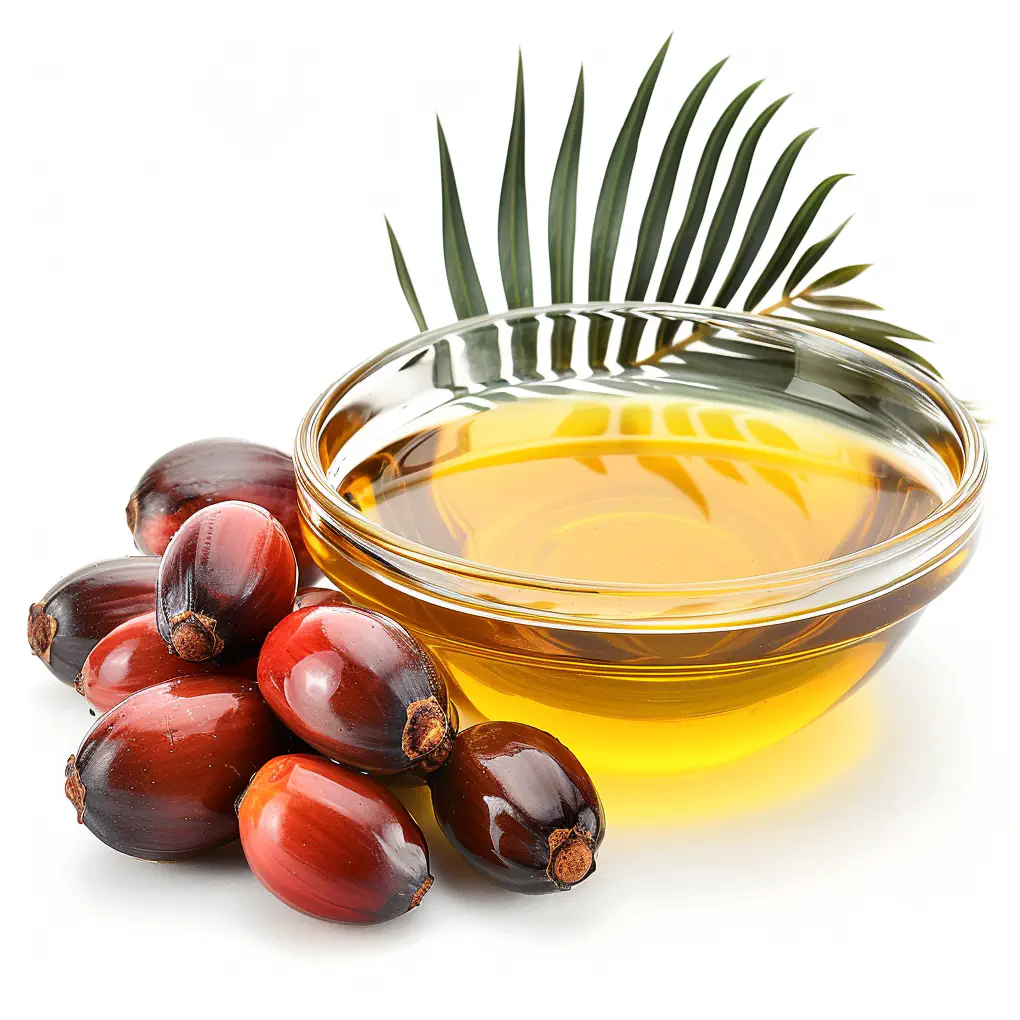
Palm oil is a vegetable oil derived from the fruit of oil palm trees.
Applications
- Food industry. Palm oil is widely used in the food industry as an ingredient in a variety of products. It is used in cooking oils, margarine, shortening, and various processed foods like snacks, baked goods, and ready-to-eat meals. Palm oil’s stability at high temperatures and neutral flavor make it suitable for frying and cooking applications.
- Personal care and cosmetics. Palm oil is used in the production of soaps, lotions, creams, and other personal care products. It adds moisturizing properties, contributes to a smooth texture, and helps products hold their scent.
- Biofuel. Palm oil is a significant feedstock for the production of biodiesel, which is a renewable and cleaner-burning alternative to fossil fuel-based diesel. Its high energy content and low sulfur content make it an attractive option for biodiesel production.
- Oleochemical industry. Palm oil serves as a valuable raw material for the oleochemical industry, which produces various chemicals from natural oils and fats. These chemicals are used in the manufacturing of detergents, surfactants, lubricants, paints, coatings, and many other industrial products.
- Animal feed. Palm oil by-products, such as palm kernel expeller, are utilized in animal feed formulations for livestock, poultry, and aquaculture. These by-products provide a source of energy and nourishment for animals.
Characteristics
- Appearance. Palm oil is typically a yellow-orange to reddish liquid at room temperature. It has a smooth and creamy consistency.
- Melting point. The melting point of palm oil is around 35-45 degrees Celsius (95-113 degrees Fahrenheit). This relatively low melting point allows it to remain liquid at room temperature.
- Density. The density of palm oil is approximately 0.89 grams per milliliter. It is slightly less dense than water.
- Viscosity. Palm oil has a relatively high viscosity, meaning it flows sluggishly. However, its viscosity decreases as the temperature increases, becoming more fluid.
- Solidification. When cooled below its melting point, palm oil solidifies into a semi-solid or solid form, depending on the specific application. This property is helpful when it comes to certain food processing, such as making margarine or shortening.
Request a quotation for palm oil
Tell us the grade, quantity and destination — we'll come back with pricing & availability.
Request a quotation →